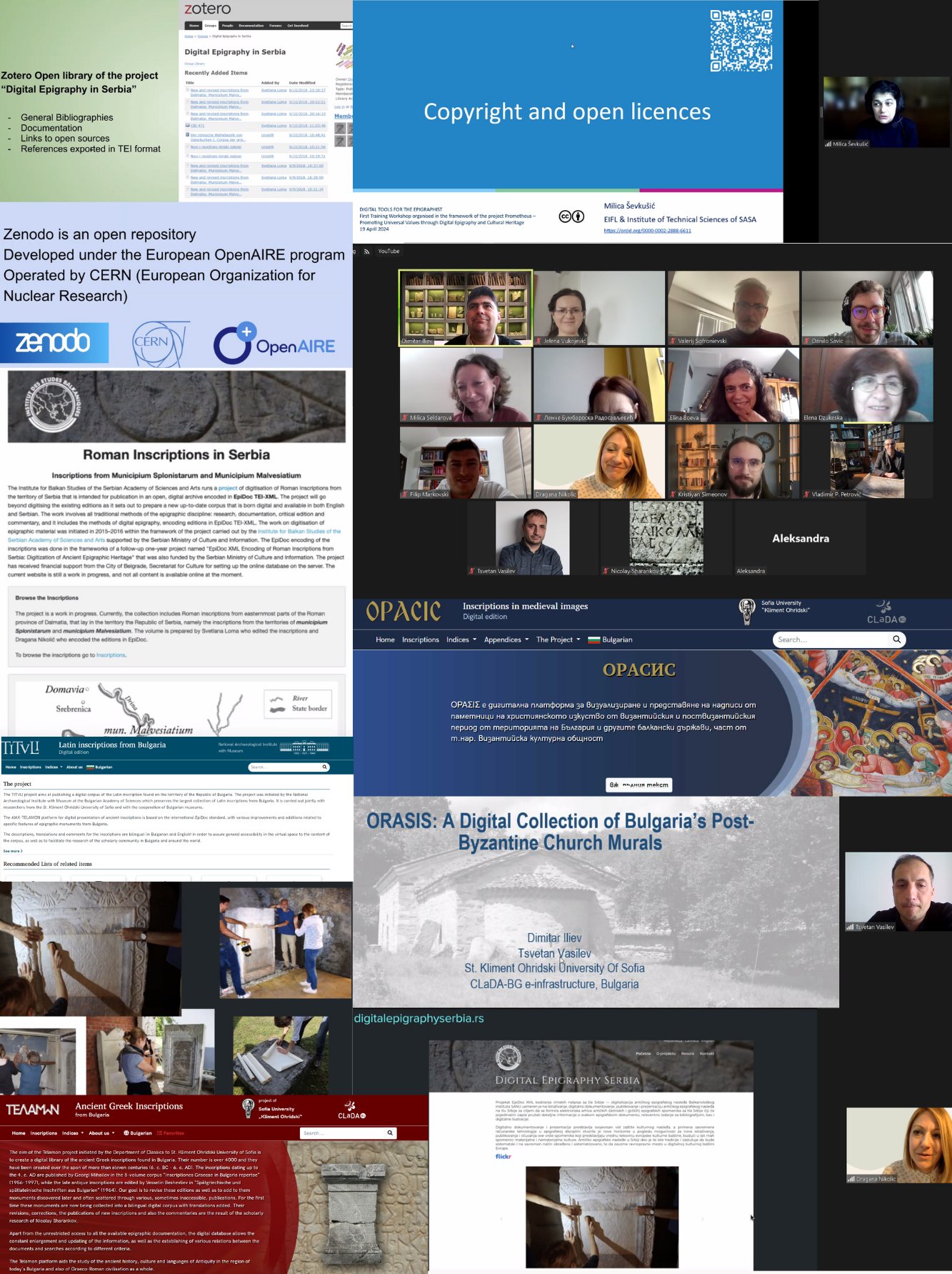
Prometheus Digital Epigraphy Workshop recap: A Week of Learning, Innovation, and Collaboration
From April 15–19, 2024, the first event of the Prometheus Digital Epigraphy Project brought together leading experts, emerging scholars, and digital enthusiasts for a transformative five-day online workshop. Held entirely online, this workshop marked the dynamic beginning of the Prometheus Digital Epigraphy Project—a two-year collaborative initiative developed by cultural and academic institutions from Bulgaria, North Macedonia, and Serbia. This first event brought together experts and participants from across the region, uniting them in a shared effort to explore and advance the field of digital epigraphy.
With participants joining remotely from across Europe and beyond, the workshop offered open access to a rich blend of lectures, practical sessions, and project presentations. Each day delivered fresh insights, hands-on learning opportunities, and inspiring discussions that bridged the gap between classical studies and modern digital technologies.
Day 1: Setting the Stage with Inspiration
The workshop launched with a warm welcome and compelling introductory lectures by Elena Dzukeska and Dragana Nikolić, whose depth of expertise and engaging delivery set the tone for the days to come. Participants were quickly immersed in the intellectual atmosphere, with sessions designed to spark curiosity and encourage critical reflection.
The focus then shifted to the intricacies of markup languages and XML, masterfully presented by Dimitar Iliev and Elina Boeva. Their clear, practical explanations demystified complex topics and laid the groundwork for participants to engage confidently in the hands-on components of the workshop.
Afternoon sessions featured vibrant collaborative exercises that encouraged peer interaction and experimentation with digital tools—an energetic start that energized everyone involved.
Day 2: Exploring Metadata and Platforms
The second day delved deeper into metadata encoding, a core aspect of digital epigraphy. The highlight of the day was a guest lecture by Anđelka Zečević from the Mathematical Institute of the Serbian Academy of Sciences and Arts (SASA). Her presentation on the GitHub platform opened new perspectives on collaborative research and project sustainability in the digital humanities.
The momentum of the workshop continued to build, with participants expressing enthusiasm for the learning process and the practical relevance of each topic covered.
Days 3 & 4: Practical Tools, New Skills
Mid-week sessions showcased a range of tools and workflows essential for modern epigraphic work. Alongside continued instruction by Dimitar Iliev and Elina Boeva, new contributors joined the virtual stage. Kristiyan Simeonov and Polina Yordanova introduced participants to:
-
Authority Files Creation: Techniques for building and managing authority lists.
-
Front-End Services: An overview of digital services supporting epigraphic platforms.
-
Working with EFES: Tips and insights on using the EpiDoc Front-End Services tool.
-
AIAX Tool Demonstration: A hands-on look at visualising inscriptions using AIAX.
An especially memorable session was led by Nenad Jončić, who presented a fascinating demonstration of 3D Imaging for Ancient Inscriptions. This innovative approach to epigraphic documentation left participants excited about the possibilities of immersive digital visualisation in future research.
Day 5: Wrapping Up with Impact
The final day offered a broader look at the digital research landscape and some of the region’s most successful digital epigraphy projects. The morning began with a session by Milica Ševkušić from the Institute of Technical Sciences, SASA, who explored Copyright and Open Licenses. Her thought-provoking presentation triggered a lively discussion among attendees.
Next, Dragana Nikolić led an engaging, user-friendly workshop on utilising digital repositories like Zotero and Zenodo, helping participants enhance their digital scholarship toolkits.
The day’s standout moments included presentations of flagship projects:
-
"Telamon" and "Tituli" from Bulgaria, presented by Dimitar Iliev.
-
"ORASIS" – a Post-Byzantine Church Inscriptions project, with insights shared by special guest Tzvetan Vasilev.
-
"Roman Inscriptions in Serbia", presented by Dragana Nikolić in the closing session.
The final discussion was marked by heartfelt participant feedback and a sense of accomplishment. The workshop successfully created a vibrant space for dialogue, experimentation, and connection—hallmarks of the Prometheus Project’s mission.
Looking Ahead
The April workshop was only the beginning. With two years of planned activities, the Prometheus Digital Epigraphy Project promises continued growth, collaboration, and innovation in the study of ancient inscriptions through digital means. Whether you’re a student, scholar, or simply curious about the intersection of classics and technology, this project offers numerous opportunities to get involved and stay inspired.
Missed the Workshop? Watch Online
All sessions from the workshop week are available on our official YouTube channel. Whether you want to revisit a favourite lecture or explore sessions you missed, you’ll find the entire archive here:
Prometheus Digital Epigraphy YouTube Channel