Epigraphic research in South-Eastern Europe - PART 1
CORPORA
Inscriptions de la Mésie supérieure – IMS
This remarkable series, initiated by Prof. Dr Fanula Papazoglu and published by the Centre for Ancient Epigraphy and Numismatics at the Faculty of Philosophy in Belgrade, is dedicated to collecting and publishing epigraphic inscriptions from the Roman province of Upper Moesia.
Each volume, released in French, includes: detailed transcriptions, photos and commentary on inscriptions; comprehensive geographical and historical introductions; contextual information on historical significance, archaeological context and scholarly and discussions.
With mostly Latin inscriptions and some in Greek, IMS has published five volumes so far, each meticulously edited and organized by the location where the inscriptions were discovered:
IMS I - Singidunum et le Nord-Ouest de la province (1976) edited by M. Mirković & S. Dušanić
IMS II Viminacium et Margum (1986) edited by M. Mirković
IMS III/2 Timacum minus et la Valée du Timok (1995) edited by P. Petrović
IMS IV Naissus — Remesiana — Horreum Margi (1979) edited by P. Petrović
IMS VI Scupi et la Région de Kumanovo (1982) edited by B. Dragojević-Josifovska
Although these editions are not very recent, their value for studying the inscriptions of this region remains undiminished. They are still irreplaceable and extremely relevant for researchers and scholars alike.
Inscriptiones Graecae X 2, 2, 1 and Inscriptiones Graecae X 2, 2, 2
The collection and edition of Greek inscriptions is the oldest project of the Berlin-Brandenburg Academy of Sciences and Humanities. The collection is organized in volumes, parts, fascicles, and sections by regions. More than 50 have been published so far.
The second fascicle of the second part of the tenth volume of this fascinating edition encompasses the inscriptions of Macedonia Septentrionalis (North Macedonia).
The inscriptions belonging to the ancient regions of Lyncestis, Heraclea Lyncestis, Pelagonia, Derriopus, Lychnidus (modern Ohrid) are included in its first section, which was edited by Fanula Papazoglu, Milena Milin, Marijana Ricl adiuvante Klaus Hallof and published in1999. Its second section, covering the regions of the valleys of the rivers Axius (modern Vardar), Astibo (modern Bregalnica) and Strumica, appeared just recently, in 2023 and was edited by Slavica Babamova. It contains more than 780 inscriptions, many of which previously unpublished, many reread and reinterpreted, all of them accompanied by the critical apparatus and fresh photographs. ️
Publication of inscriptions comes at the end of a long research process involving field work, study, conservation, reading, editing and the work of many scholars and experts. The editions of IG X 2, 2, 1 and 2, edited with great support by Klaus Hallof, follow the highest criteria in the field of epigraphy and represent the most significant contribution towards the preservation of cultural heritage. They also celebrate the tradition of studies dedicated to epigraphy and archaeology in the regions of Southeastern Europe.
Inscriptiones Stoborum
The inscriptions found in municipium Stobensium were first published in a corpus in English in 2012 by the National Institution Stobi as Book I of the Monograph Series Studies in the antiquities of Stobi. Archaeological excavations from the beginning of the 20th century, as well as surface finds, gave a total of 309 inscriptions only from the city itself. They were incorporated in the corpus with reviewed readings edited by Slavica Babamova.
Epigraphic monuments from Plaošnik – Ohrid
Archaeological excavations conducted at Plaošnik, the core of the ancient city of Lychnidos, revealed inscriptions which were incorporated in the corpus “Epigraphic monuments from Plaošnik – Ohrid”, in Macedonian and English, edited by Slavica Babamova and Kalina Kuzman Dodevska and published by the Institute and Museum in Ohrid in 2021. The book also includes an extended introduction to the historical and epigraphic sources for the history of ancient Lychnidos and the territory of the Dassaretii.
SCHOLARS
Nikola Vulić
(1872-1945)
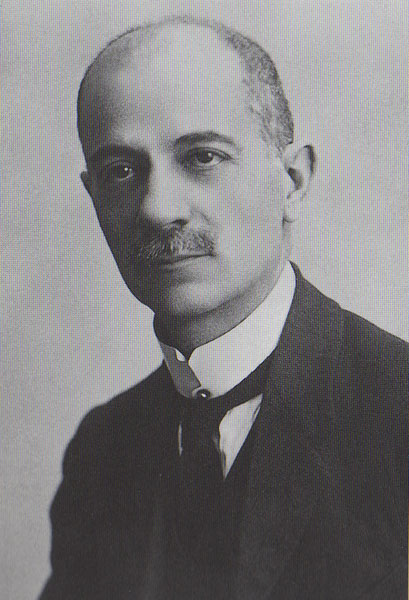
Nikola Vulić was born in Skadar in 1872. He completed elementary school in Boljevac and attended lower secondary school in Zaječar and Aleksinac. He finished upper secondary school in Belgrade. In 1894, he graduated from the Faculty of Philosophy of the Great School (Velika škola) in Belgrade, where he studied Classical Philology, Archaeology, and History. He continued his postgraduate studies at the University of Munich and defended his doctoral dissertation titled Historische Untersuchungen zum Bellum Hispaniense in 1896.
In 1897, he was appointed Associate Professor, and in 1901, Full Professor at the Faculty of Philosophy of the Great School in Belgrade, teaching General History of Antiquity. Upon the founding of the University of Belgrade in 1905, he became an Associate Professor there. He participated in World War I as a volunteer. After the war, in 1919, he was reappointed Full Professor at the Faculty of Philosophy in Belgrade. In 1921, he became a Full Member of the Serbian Royal Academy. Vulić was a lifelong member of the International Union of Academies in Brussels; a corresponding member of the French Academy of Sciences, the Vienna Academy of Sciences, and the Romanian Academy of Sciences; a member of the Vergilian Academy in Mantua; a regular member of both the Berlin and Vienna Archaeological Societies; and held honorary doctorates from the Universities of Padua and Clermont-Ferrand. He served as President of the Serbian Archaeological Society, editor of the journal Starinar, and President of the Historical Society of Serbia.
In 1938, he was forcibly retired for political reasons, due to disagreements with members of Prince Pavle’s government, though he continued to lecture at the Kolarac People’s University. During World War II, he was imprisoned in the Banjica concentration camp.
He died in Belgrade in 1945.
The work of Nikola Vulić comprises more than 550 scholarly studies in the fields of epigraphy, numismatics, historiography, and classical philology, particularly distinguished for his contribution to the use of ancient authors as historical sources. He studied the major Balkan tribes of antiquity and also devoted significant attention to the works of Homer, Pindar, Catullus, and Virgil. Clear and precise in expression, he laid the foundations for the study of Balkan antiquities.
His education in classical languages provided him with the breadth necessary to approach the entire corpus of ancient heritage of the Balkan lands. Vulić also directed archaeological excavations in Serbia and Macedonia, including those at the Archaic necropolis near Trebenište and the theatre in Scupi, for which he received recognition from the French Archaeological Institute.
Borka Dragojević Josifovska
(1910–2003)

Professor Borka Dragojević Josifovska was born in 1910 in Gornja Banica (Bosnia and Herzegovina). She completed classical gymnasium in Bihać in 1930, and graduated in Classical Philology with Ancient History and Archaeology from the Faculty of Philosophy in Belgrade in 1934. She worked as a high school teacher in several towns across Serbia, Montenegro, and Macedonia. From 1948, she served as a curator in the Archaeological Department of the National Museum in Skopje, and later, after the establishment of the Archaeological Museum, as a curator in its Classical Antiquities Department. In August 1950, she was transferred to the Central Institute for the Protection of Cultural and Historical Monuments of the People’s Republic of Macedonia. In 1952, she returned to the Archaeological Museum, where she worked as head of the Lapidarium and, for a time, also as head of the Department of Antiquity.
Her work as a curator involved the meticulous and precise cataloguing, organisation, and documentation of stone monuments from the ancient period that she found in Kuršumli An after the Second World War. Some of the inscriptions that today belong to the museum’s collection were discovered and brought in by her from various locations, thus enriching the assemblage, which at that time was considered the largest of its kind in the Balkans. In the documentation of the Archaeological Museum, many of her personal notes and reflections are preserved, testifying to the thoroughness and enthusiasm with which Josifovska carried out her work. As a result of such dedication, in 1956, together with the architect Boris Čipan, she organised a lapidarium in the stables of Kuršumli An, for which she wrote the guidebook “Guide through the Lapidarium”. She also applied her broad erudition in ancient civilisation as a director of several reconnaissance missions and archaeological excavations, including those at Isar–Marvinci, Dračevo, Živojno, Stobi, and Scupi.
From 1958 to 1976, she worked first as a lecturer and later as an associate professor of Latin language at the Department of Classical Philology of the Faculty of Philosophy in Skopje. Her broad knowledge of ancient civilisation continued to be reflected in her scholarly publications, more than 40 scientific articles, in which she published newly discovered inscriptions from Macedonia, numismatic finds, reports from reconnaissance missions and archaeological excavations. In these works, she also dealt with historical geography, and she crowned her career with the corpus of inscriptions from Scupi and the Kumanovo region (Inscriptions de la Mésie Supérieure, vol. VI, Belgrade, 1982).
She was also a member of three inter-academic committees: for the publication of ancient inscriptions from Yugoslavia, for the Tabula Imperii Romani, and for the Limes project.
She passed away in Skopje in 2003. Although she spent the final years of her life confined to her home in the Debar Maalo, shortly before her death, as a testament to the love that gave her strength and inspiration for one last contact with the stone monuments to which she had devoted her entire professional life, Borka Josifovska visited the Kuršumli An one last time.
Slavica Babamova
Further reading:
14. Зборник на археолошки музеј
Acad. Fanula Papazoglu
(1917–2001)
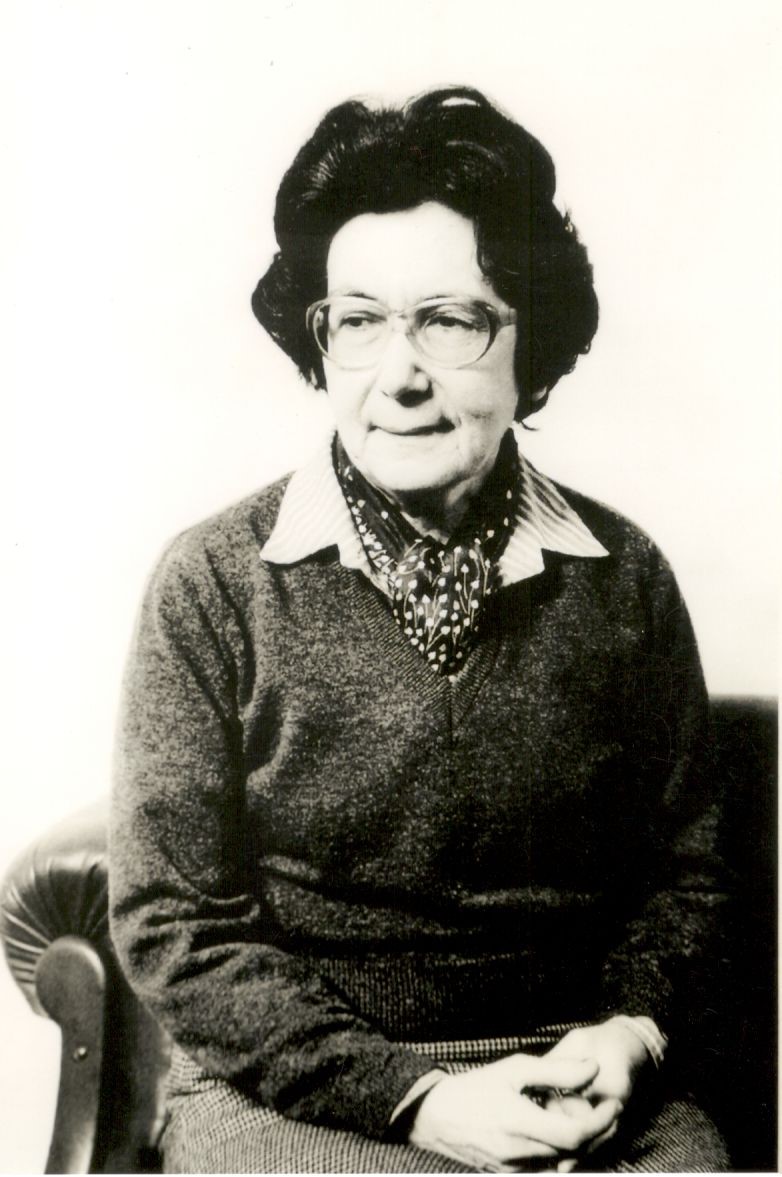
Fanoula Papazoglou was born in Bitola (present-day North Macedonia) in 1917. She completed her elementary education at the French School in Bitola from 1921 to 1929, and afterwards attended high school and a commercial academy in the same city. In 1936, her family moved to Belgrade (Serbia), where she began studies in Classical Philology with History and Archaeology at the Faculty of Philosophy, University of Belgrade. Before and after the Second World War, she worked as a clerk, and since the war interrupted her studies, she graduated in December 1945.
During the war, she joined the Partisan movement. Between 1942 and 1943, she spent six months imprisoned in the Banjica concentration camp, and in 1944, she served on the Front of Srem.
In 1947, she was appointed Assistant in Ancient History, and in 1949, Lecturer at the Department of Ancient History, Faculty of Philosophy, University of Belgrade. She earned her doctorate in 1955 with the dissertation “Macedonian Cities in Roman Times” and was immediately promoted to Assistant Professor. In 1960, she became Associate Professor and Head of the Department, and in 1965, she was elected Full Professor of Ancient History. In 1969, on her initiative, the Centre for Ancient Epigraphy and Numismatics was founded, and today it bears her name.
She was elected Corresponding Member of the Serbian Academy of Sciences and Arts (SASA) in 1974, and Full Member in 1983. From 1972, she was a Corresponding Member of the German Archaeological Institute, Doctor honoris causa of the Université Paris–Sorbonne (Paris IV) since 1982, and an Honorary Member of the Philological Society “Parnassos” in Athens since 1993.
She was also a member of the Academy of Sciences and Arts of Bosnia and Herzegovina (ANUBiH) and was elected a Corresponding Member of the Macedonian Academy of Sciences and Arts (MANU) in 1994.
For her outstanding scholarly achievements, she received numerous awards, including the October Prize of the City of Belgrade (1970) for her book “Central Balkan Tribes in Pre-Roman Times: Triballi, Autariatae, Dardanians, Scordisci, and Moesians”, and the “7 July” Lifetime Achievement Award for historical sciences in 1988.
She passed away in Belgrade in 2001.
The scholarly opus of Acad. Fanula Papazoglou comprises more than 130 publications devoted to the history of the Balkans, spanning from prehistoric times to the Middle Ages. Her works represent foundational and irreplaceable studies in modern Balkan ancient historiography.
Among her most significant works are: “Macedonian Cities in Roman Times” (Special Editions of Živa Antika, No. 1, Skopje, 1957), which was expanded three decades later and published in French under the title “Les villes de Macédoine à l’époque romaine” (Supplement BCH, Paris, 1988); “Central Balkan Tribes in the Pre-Roman Period: Triballi, Autariatae, Dardanians, Scordisci, and Moesi” (Sarajevo, 1969). These monographs, together with her numerous articles devoted to Balkan onomastics, geography, history, administrative organisation, and especially epigraphy and numismatics, are fundamental to the study of antiquity in the Balkans. Many of them remain relevant and unsurpassed even today.
Professor Papazoglou also initiated and edited the publication of corpora of ancient inscriptions from the provinces of Macedonia and Upper Moesia. The inscriptions from the western part of North Macedonia were published in Inscriptiones Graecae X 2, 2, 1 as a result of collaboration between the Serbian Academy of Sciences and Arts (SASA), the Macedonian Academy of Sciences and Arts (MANU), and the Berlin-Brandenburg Academy of Sciences. The inscriptions from Upper Moesia (Inscriptions de la Mésie Supérieure) were published as the result of the work of the Centre for Ancient Epigraphy and Numismatics, which she founded and directed.
Through her exceptional knowledge, profound understanding of ancient civilisation, and rare scientific intuition, combined with discipline and dedication, Acad. Papazoglu selflessly shared her expertise with many generations of students, leaving a lasting legacy in the study of Balkan antiquity.
Slavica Babamova
Further reading
Osamdeset godina profesora Fanule Papazoglu
BIBLIOGRAPHIE DES TRAVAUX DE FANOULA PAPAZOGLOU
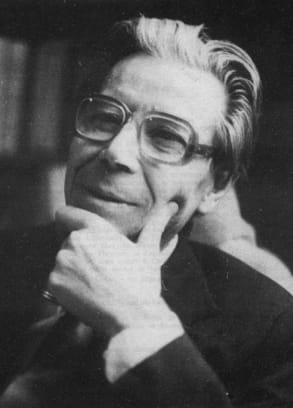
Among Georgi Mihaylov's diverse scholarly activities, Greek epigraphy holds the most significant place. His interest in this discipline was sparked during his student years when he presented his work on "The Language of the Greek Inscriptions in Bulgaria." It was subsequently supplemented, revised, and refined for over half a century, only to become his most important work: "The Greek Inscriptions Found in Bulgaria", a corpus containing more than 4000 inscriptions in five volumes— deciphered, richly documented, and commented on by the author. It brought him wide international recognition, including the crown of the French Academy in 1957. Georgi Mihaylov was a foreign member of the French Academy of Sciences and the English Royal Society. Among his most remarkable contributions to the epigraphic community was the initiation of the International Association of Greek and Latin Epigraphy. He was elected as its President and remained such until the end of his life.